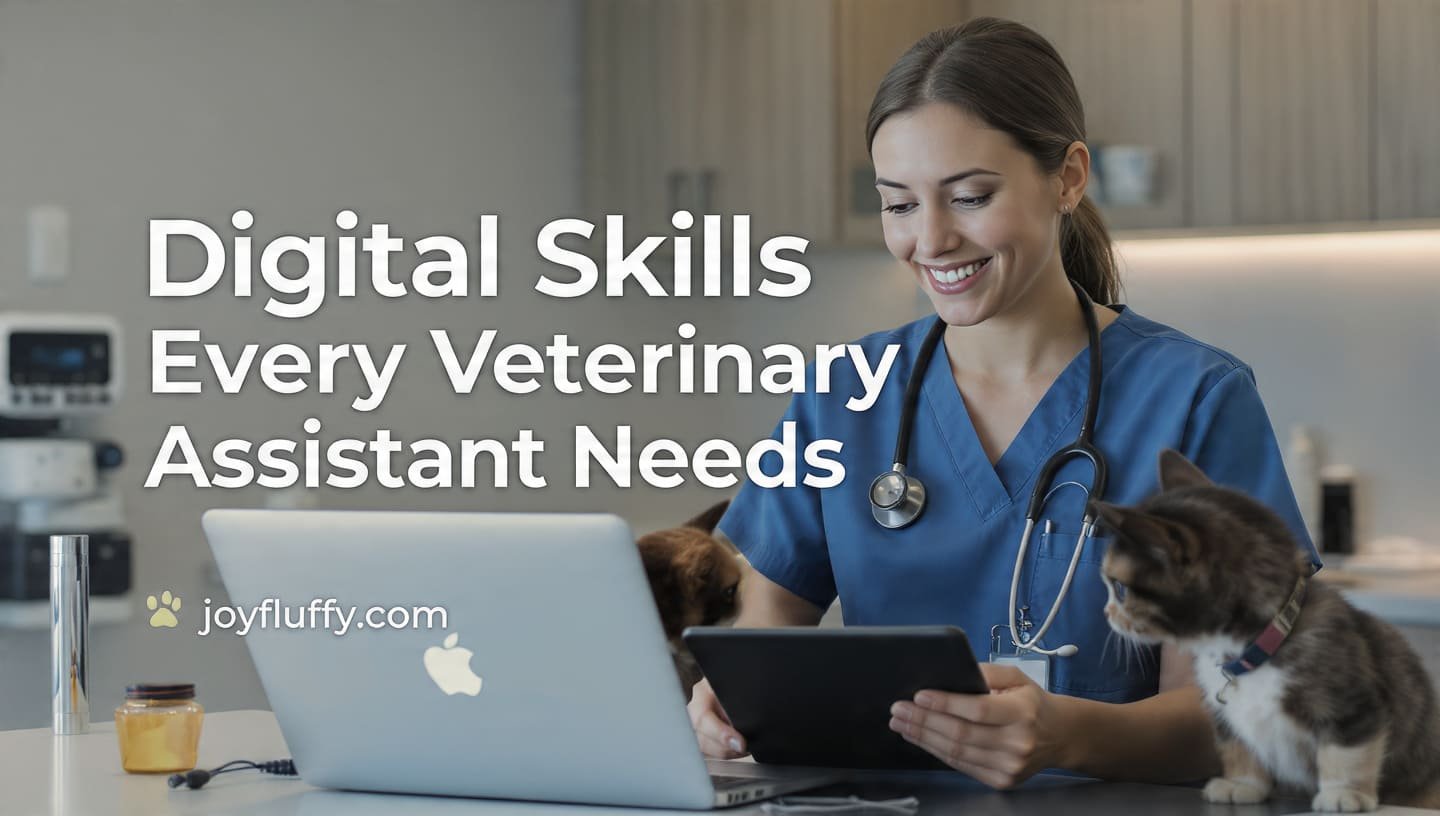
AI in the Clinic: 5 Digital Skills Every Veterinary Assistant Needs by 2027

If you’re a veterinary assistant wondering what skills you’ll need to stay competitive in the coming years, you’re in the right place. This comprehensive guide reveals the five essential AI and digital skills every veterinary assistant needs to master by 2027, along with practical job-hunting strategies for both USA and EU markets.
The Veterinary Clinic of 2027: A Morning Revolution
Imagine walking into your clinic on a typical Tuesday morning. Before you’ve even hung up your coat, your tablet displays AI-generated triage reports from overnight monitoring. A notification pings: Max, the Golden Retriever in room three, has shown decreased water intake for forty-eight hours according to his smart bowl. Another alert signals that Mrs. Johnson’s cat might need a follow-up based on predictive analytics from her last visit.
This isn’t science fiction. This is the veterinary clinic of 2027, and it’s arriving faster than most people realize.
The veterinary field is experiencing a digital transformation that rivals what human healthcare went through a decade ago. But here’s the good news: AI won’t replace veterinary assistants. Instead, artificial intelligence will eliminate the tedious, repetitive tasks that drain your energy and time, allowing you to focus on what truly matters—providing compassionate care to animals and their worried owners.
According to recent American Veterinary Medical Association (AVMA) reports, clinics adopting AI technologies have seen a thirty percent increase in patient throughput while simultaneously improving staff satisfaction scores. Why? Because assistants spend less time on paperwork and more time doing what they love: caring for animals.
The shift is already happening. Clinics across California, Texas, and New York are implementing AI-powered practice management systems. European countries like Germany, the UK, and the Netherlands are racing ahead with smart diagnostic tools and wearable technology for pets. If you want to remain competitive and valuable in this evolving landscape, you need to start building these digital skills now.
Skill 1: Mastering AI-Scribing and Voice Documentation
The “Death to the Keyboard” Revolution
Remember spending half your day hunched over a computer, typing up exam notes while trying to remember what Dr. Martinez said about that Labrador’s limp? Those days are ending. Welcome to the era of ambient AI scribing.
AI scribing tools like VetScribe and Dragon Veterinary are transforming how veterinary clinics handle documentation. These systems use natural language processing to listen to conversations during examinations and automatically generate comprehensive medical records. But here’s what most people don’t understand: the real skill isn’t just pressing the record button.
Why AI Prompt Engineering Matters
Think of AI as an incredibly smart intern who needs clear instructions. The difference between a mediocre clinical summary and an excellent one often comes down to how well you’ve trained the AI to capture what matters for your specific clinic.
For example, let’s say Dr. Chen is examining Bella, a twelve-year-old Beagle with a heart murmur. A basic AI transcription might capture: “Dog has grade three heart murmur, slightly overweight, owner reports occasional coughing.”
But an assistant skilled in AI prompt engineering would ensure the system captures the nuances: “Bella presents with grade three systolic heart murmur, best auscultated at left apex. Weight has increased four pounds since last visit six months ago. Owner reports nocturnal coughing episodes occurring two to three times weekly, particularly after exercise. Previous chest X-rays from March 2026 showed mild cardiomegaly. Owner concerned about referral to cardiology specialist.”
The skill here is understanding what information downstream providers need. If Bella needs a cardiology referral, that specialist will appreciate knowing the progression of symptoms, not just the current snapshot. You become the bridge between conversational veterinary care and precise medical documentation.
Getting Started with AI Scribing
Start by familiarizing yourself with the major platforms. Many offer free trials or demo versions:
- Dragon Veterinary Edition: Industry standard for voice recognition with veterinary-specific vocabulary
- Talkatoo: Affordable option specifically designed for veterinary practices with strong accuracy rates
- VetScribe AI: Emerging platform with real-time collaboration features
Practice with mock examinations. Record yourself describing pet examinations and review how the AI interprets your words. Learn its quirks. Does it struggle with certain breed names? Does it misinterpret medical abbreviations? Understanding these limitations makes you invaluable.
Skill 2: Predictive Triage and Wearable Data Management
From Reactive to Predictive Care
The future of veterinary assistance isn’t about responding to emergencies—it’s about preventing them. Wearable technology and predictive analytics are turning veterinary assistants into the first responders of pet health.
Smart collars like FitBark, Whistle, and Animo are becoming standard equipment for pet owners. These devices track activity levels, sleep patterns, heart rate variability, and even eating habits. By 2027, analysts predict that over forty percent of pets in developed countries will have some form of wearable health monitor.
But raw data means nothing without interpretation. That’s where you come in.
Distinguishing Signal from Noise
Here’s a real scenario that happened at a clinic in Austin, Texas: A dog’s smart collar reported that its heart rate spiked to one hundred eighty beats per minute at two a.m. Alarming, right? But the experienced veterinary assistant noticed something the AI dashboard didn’t flag: the owner had reported that same timestamp as when a thunderstorm passed through the neighborhood.
That’s noise, not signal.
However, when another dog showed a gradual but consistent decrease in daily activity levels over three weeks—dropping from three hours of active movement to ninety minutes—combined with increased resting heart rate and interrupted sleep patterns, that assistant recognized early-stage congestive heart failure indicators. The dog was examined, diagnosed, and started on medication before showing any obvious clinical symptoms.
That’s the signal that saves lives.
Mastering AI Dashboard Analytics
Modern veterinary practice management software integrates wearable data into comprehensive dashboards. Your job is to become fluent in reading these digital vital signs. Look for patterns, not isolated incidents. A single day of reduced activity might mean nothing. Seven consecutive days of twenty percent reduction? That deserves attention.
Key metrics to monitor:
- Activity trend lines: Gradual changes over weeks are more significant than daily fluctuations
- Sleep quality scores: Interrupted sleep can indicate pain, anxiety, or systemic illness
- Heart rate variability: Decreased HRV often precedes cardiac events
- Eating and drinking patterns: Changes here are early warning signs for numerous conditions
Learning to interpret this data requires training. Seek out continuing education courses offered by NAVTA (National Association of Veterinary Technicians in America) or European equivalents. Many wearable companies also offer certification programs for veterinary professionals.
Just like learning about monitoring water parameters for aquarium fish like Corydoras requires understanding baseline values and recognizing concerning trends, wearable pet data interpretation follows similar principles of baseline establishment and deviation recognition.
Skill 3: AI-Enhanced Client Communication and Education
Becoming the Translator Between Science and Love
Pet owners already consult “Dr. Google” before they call your clinic. Your job isn’t to compete with the internet—it’s to provide something better: personalized, accurate, compassionate information delivered in a way that anxious pet parents can actually understand and use.
AI communication tools are revolutionizing how veterinary clinics educate clients. But they’re not replacing the human touch—they’re amplifying it.
Personalized Post-Op Care Videos
Remember when post-operative care meant handing clients a photocopied instruction sheet? Those days are ending. Platforms like Ask Eddie and PetDesk now use AI to generate customized video instructions based on the specific procedure, pet breed, age, and even the owner’s comprehension level.
Here’s how it works: After Buddy’s dental cleaning, instead of generic instructions, you use the AI platform to generate a three-minute video featuring:
- Breed-specific considerations for Golden Retrievers recovering from anesthesia
- Timeline for when Buddy can resume normal activity
- Visual demonstrations of proper medication administration
- Warning signs specific to dental procedures
- Dietary recommendations for the next seventy-two hours
The video is sent directly to the owner’s phone before they leave the parking lot. Compliance with post-op care instructions improves dramatically because the information is accessible, visual, and specific to their pet.
Bilingual AI Translation: Breaking Language Barriers
One of the most powerful but underutilized AI skills is real-time medical translation. Not just translating Spanish to English, but translating “veterinary jargon” to “worried pet parent language.”
Consider this actual example from a New York clinic: Dr. Patel tells you to explain to Mr. Kim that his cat has “chronic renal insufficiency with azotemia and isosthenuria.” You could relay that exactly as stated. Or you could use AI-assisted translation tools to explain:
“Mr. Kim, Fluffy’s kidneys aren’t filtering waste products from her blood as well as they should. Think of her kidneys like coffee filters that are getting clogged. We caught this early, which is excellent news. With dietary changes and regular monitoring, many cats live comfortably for years with this condition. The blood work numbers we’re concerned about are the ones that show waste buildup. We’ll work together to bring those down.”
For clinics serving diverse communities, AI translation extends to actual language translation. Tools integrated into practice management software can instantly translate discharge instructions, medication labels, and follow-up care information into dozens of languages. The assistant who knows how to leverage these tools becomes indispensable in multicultural markets.
Building Digital Client Education Libraries
Modern clinics are creating custom digital resource libraries using AI content generators. You can curate and customize resources for common conditions:
- Diabetes management in cats with video tutorials on insulin administration
- Anxiety reduction techniques for dogs with separation issues
- Senior pet care guides with age-appropriate exercise recommendations
- Nutrition guides for special dietary needs
The skill is knowing which resources to recommend and how to personalize them. AI can generate the content, but you provide the human judgment about what Mrs. Thompson needs to hear after her dog’s cancer diagnosis versus what Mr. Jackson needs for his puppy’s first visit.
Skill 4: Digital Inventory and Automated Workflow Management
From Manual Counts to Predictive Ordering
If you’re still doing manual inventory counts with a clipboard, you’re working harder than you need to. AI-powered inventory management is transforming one of the most tedious aspects of veterinary assistance into an automated, predictive system.
Smart inventory systems use historical data, seasonal patterns, and even local weather forecasts to predict when supplies will run low. They automatically generate purchase orders and can even compare supplier prices to optimize costs.
Seasonal Surge Prediction
Every experienced veterinary assistant knows that flea and tick medication flies off the shelves when spring arrives. But AI takes this intuition and quantifies it. The system learns that your clinic typically sees a two hundred percent increase in flea preventative purchases starting the third week of March in your geographic area.
It knows that heartworm tests spike in April because dogs are due for annual wellness exams. It tracks that your clinic uses thirty percent more sedation supplies during fireworks season around July Fourth because of anxiety-related appointments.
Instead of scrambling to reorder supplies when you run out, the AI ensures optimal stock levels automatically. Your job shifts from reactive ordering to strategic oversight.
Optimizing Clinic Flow with AI Analytics
Beyond inventory, AI workflow management analyzes how your clinic operates and identifies bottlenecks you might not notice. Which exam rooms are underutilized? What times of day see the longest wait times? How long does the average dental procedure actually take versus scheduled time?
One clinic discovered through AI analytics that Room Three was used only sixty percent as often as other rooms because it was located at the end of a hallway. Simple solution: They designated it as the “wellness exam room” and scheduled all healthy pet checkups there. Utilization increased to ninety percent, allowing them to see more patients daily without extending hours.
Another clinic found that surgical procedures scheduled for Monday mornings consistently ran twenty minutes longer than those on other days. Investigation revealed that weekend inventory restocking often delayed Monday setups. They adjusted their workflow, and on-time surgical starts improved by eighty percent.
Practical AI Workflow Skills
To master this skill, you need to understand:
- Dashboard literacy: Reading and interpreting efficiency metrics
- Pattern recognition: Identifying trends in clinic operations
- System optimization: Implementing AI recommendations while maintaining quality care
- Integration management: Ensuring inventory systems communicate with practice management software
Many practice management platforms like IDEXX Cornerstone, ezyVet, and Avimark now include AI-powered analytics modules. Invest time learning these systems deeply. The assistant who can generate meaningful operational reports becomes a strategic asset to clinic management.
Similar to how maintaining optimal conditions for aquarium species like Chalk Bass requires monitoring multiple parameters and making proactive adjustments, clinic workflow optimization demands continuous monitoring and responsive changes to maintain peak efficiency.
Skill 5: AI Ethics, Bias, and Data Privacy
Becoming the Gatekeeper of Trust
As veterinary clinics collect more data and rely more heavily on AI, someone needs to stand watch. That someone is you. Understanding AI ethics and data privacy isn’t optional anymore—it’s a core professional responsibility.
AI systems are powerful, but they’re not perfect. They can make mistakes. They can exhibit bias. And they have no concept of privacy or ethics. Those are human responsibilities.
Understanding AI Hallucinations
Here’s a real scenario that happened at a clinic in Oregon: An AI diagnostic tool analyzed blood work from a Labrador and flagged potential liver disease based on elevated alkaline phosphatase levels. The system recommended immediate ultrasound and possible biopsy.
The veterinary assistant, trained in AI limitations, recognized something the system missed: the dog was a young, rapidly growing puppy. Elevated alkaline phosphatase is completely normal in growing dogs because their bones are actively developing. The AI had been trained primarily on adult dog data and “hallucinated” a problem that didn’t exist.
The assistant flagged this for the veterinarian, who confirmed the levels were appropriate for age. A worried owner was spared unnecessary procedures and expense. The clinic updated their AI system with better age-stratified reference ranges.
- Does this make clinical sense? Trust your training and observations.
- What might the AI not know? Context, recent changes, patient history quirks.
- What’s the risk if we’re wrong? Balance caution with reasonable action.
Protecting Patient Privacy in the Digital Age
When a pet owner shares their email address, phone number, and credit card information, they’re trusting your clinic with sensitive data. When smart collars and wearables add health data, location tracking, and behavioral patterns, that trust deepens.
You need to understand:
- HIPAA equivalents for veterinary medicine: While HIPAA doesn’t apply to pets, ethical practices follow similar principles
- GDPR requirements: Especially important for EU clinics or any clinic serving European clients
- Data breach protocols: What to do if systems are compromised
- Consent management: Ensuring clients understand what data is collected and how it’s used
The EU AI Act and GDPR set strict standards for how AI systems can collect and use personal data. Understanding these regulations makes you valuable, especially in international practice settings or corporate veterinary groups operating across borders.
Recognizing and Reporting AI Bias
AI systems learn from historical data. If that historical data contains biases, the AI will perpetuate them. In veterinary medicine, this might manifest as:
- Diagnostic algorithms trained primarily on one breed showing reduced accuracy for others
- Triage systems that prioritize certain types of cases over others based on historical revenue rather than medical urgency
- Communication tools that struggle with non-standard pet names or multicultural client interactions
Your role is to notice these patterns and report them. Most reputable AI vendors have feedback mechanisms to improve their algorithms. Your frontline experience makes you an essential part of making these systems better and more equitable.
How to Find a Job in the USA vs. EU: A Practical Comparison
Now that you understand what skills you need, let’s talk about where and how to find opportunities that value these abilities. The job markets in the USA and EU have distinct characteristics.
| Feature | USA Market | EU Market |
|---|---|---|
| Top Job Boards | iHireVeterinary, AVMA Veterinary Career Center, LinkedIn, Indeed | Eurovet Jobs, Vet Record Jobs (UK), Indeed country-specific sites |
| Key Certifications | NAVTA (AVA certification), specialized “Digital Vet” certificates, state-specific requirements | EAEVE-aligned training, country-specific nursing diplomas (e.g., RCVS in UK) |
| AI Adoption Hubs | California (San Francisco, Los Angeles), Texas (Austin, Houston), New York City, Seattle, Boston | Germany (Berlin, Munich), UK (London, Manchester), Netherlands (Amsterdam), Nordic countries (Stockholm, Copenhagen) |
| Regulation Focus | HIPAA-equivalent data privacy, VCPR (Veterinary Client Patient Relationship) requirements | Heavy focus on GDPR compliance, EU AI Act adherence, cross-border data regulations |
| Salary Expectations (AI-skilled) | $38,000 – $52,000+ annually depending on region and experience | €28,000 – €42,000+ annually, varies significantly by country |
| Language Requirements | English essential; Spanish highly valuable in many markets | English plus local language(s); multilingual AI skills highly valued |
Strategies for Success in the USA Market
Network Strategically: Join professional groups like Veterinary Management Groups (VMG) and online communities. The Veterinary Hospital Managers Association hosts regular events where tech-forward clinics recruit. Follow veterinary AI companies on LinkedIn and engage with their content—recruiters notice active, engaged professionals.
Resume Keyword Optimization: USA applicant tracking systems scan for specific terms. Include these exact phrases in your resume:
- “Tech-savvy veterinary assistant with expertise in AI-powered practice management”
- “Digital workflow specialist experienced in predictive analytics and remote patient monitoring”
- “Proficient in SOP automation and process optimization”
- “Experience with IDEXX, Cornerstone, ezyVet” (if applicable)
- “NAVTA-certified with continuing education in veterinary technology”
Target Corporate Groups: Large veterinary corporations like VCA, Banfield, and BluePearl are investing heavily in AI technology. They often have more structured training programs for new digital tools and clearer career advancement paths.
Strategies for Success in the EU Market
Emphasize Multilingual AI Capabilities: EU clinics serve diverse client populations. Highlight your ability to use AI translation tools to assist non-native speakers. Mention specific languages you can support, even if you’re using AI assistance rather than being fluent yourself.
Understand Country-Specific Requirements: Veterinary assistant regulations vary significantly across EU countries. Research specific requirements for your target country. The UK requires RCVS registration for veterinary nurses. Germany has different state-level regulations. Netherlands offers more flexibility but values specific certifications.
Compliance as a Selling Point: EU regulations around AI and data privacy are stricter than USA standards. Demonstrate your understanding of:
- GDPR requirements for veterinary patient data
- EU AI Act implications for clinical software
- Cross-border data transfer protocols if working for multi-location practices
One successful approach used by an assistant who landed a position in Amsterdam: She created a one-page “Compliance Checklist” showing how she would ensure the clinic remained compliant with EU regulations when implementing new AI tools. This demonstrated proactive thinking and specialized knowledge.
Consider Telemedicine Platforms: EU telemedicine veterinary services are growing rapidly. Companies like FirstVet and Agria Djurförsäkring offer remote veterinary assistant positions that leverage AI for triage and client communication. These roles often allow location flexibility within the EU.
How to Apply for an AI-Forward Veterinary Position
Whether you’re applying in the USA or EU, landing a position at an AI-forward clinic requires a different approach than traditional veterinary assistant applications. You’re not just applying to work with animals—you’re positioning yourself as a technology-enabled healthcare professional.
The Resume Power Move: Digital Proficiency Section
Create a dedicated section on your resume titled “Digital Proficiency & Technical Skills.” This should appear prominently, right after your professional summary. Include:
Digital Proficiency & Technical Skills
- AI-Scribing Systems: Proficient with Dragon Veterinary, Talkatoo; trained in prompt engineering for comprehensive clinical documentation
- Wearable Data Management: Experience interpreting FitBark and Whistle health metrics; skilled in predictive health trend analysis
- Practice Management Software: Advanced user of IDEXX Cornerstone and ezyVet; certified in workflow optimization modules
- Client Communication AI: Experienced with AI-generated personalized care instructions and multilingual translation tools
- Data Privacy & Compliance: Understanding of GDPR, HIPAA-equivalent standards, and EU AI Act implications for veterinary practice
The Cover Letter Hook That Gets You Noticed
Traditional cover letters start with “I am passionate about animals.” While true, every applicant says this. Instead, position yourself as a problem-solver:
“I am a veterinary assistant who specializes in bridging the gap between advanced clinical AI and compassionate pet-parent communication. In my previous role at [Clinic Name], I implemented an AI-powered triage system that reduced average wait times by twenty-three percent while improving client satisfaction scores. I don’t just love animals—I optimize outcomes for them using technology as a tool, not a replacement, for quality care.”
This approach immediately differentiates you. You’re not another animal lover applying for a job. You’re a professional with measurable impact.
The Interview Questions to Ask
Most candidates ask about schedule, pay, and benefits. Smart candidates ask strategic questions that demonstrate forward-thinking:
- “What is your clinic’s three-year roadmap for integrating predictive diagnostics and AI-assisted care?” This shows you think long-term and want to grow with the practice.
- “What AI tools do you currently use, and what challenges have you encountered in implementation?” This positions you as someone who can help solve problems, not just use tools.
- “How does your team balance AI recommendations with clinical judgment?” This demonstrates you understand the ethical dimensions of AI in healthcare.
- “What continuing education opportunities does your clinic provide for emerging veterinary technologies?” This shows commitment to professional development.
Demonstrating Your Skills During the Interview
If possible, bring examples of your digital work:
- A mock dashboard showing how you’d monitor wearable data (you can create this using free design tools)
- Before-and-after examples of clinical notes (anonymized) showing how you improved documentation quality
- A brief presentation on your laptop or tablet demonstrating your understanding of a specific AI tool
One successful candidate brought a tablet to her interview with a five-slide presentation titled “Three Ways I Would Optimize Your Clinic’s AI Implementation.” She had researched the clinic beforehand and identified specific opportunities. She got the job offer before leaving the building.
Negotiating for AI-Related Compensation
Digital skills command premium compensation. According to industry salary surveys, veterinary assistants with demonstrated AI proficiency earn fifteen to twenty-five percent more than traditional roles. Don’t be afraid to negotiate based on your specialized skills.
When discussing compensation, frame it as value-added: “Given my expertise in AI workflow optimization, which in my previous role increased patient throughput by twenty percent while reducing overtime hours, I’m seeking compensation in the range of [X to Y], which reflects the additional value I bring to clinical operations.”
Preparing for the Future: Continuing Education and Skill Development
The five skills we’ve discussed aren’t static—they’ll evolve as technology advances. Committing to continuous learning is essential.
Recommended Learning Paths
Online Courses and Certifications:
- Coursera: “AI for Everyone” by Andrew Ng provides excellent foundational understanding
- Udemy: Search for “veterinary practice management” and “healthcare AI” courses
- NAVTA: Offers continuing education specifically for veterinary technicians and assistants
- LinkedIn Learning: Courses on data privacy, GDPR compliance, and healthcare technology
Industry Conferences and Events:
- VMX (Veterinary Meeting & Expo) – Major USA conference with technology tracks
- London Vet Show – Europe’s largest veterinary event with digital innovation showcases
- NAVTA Symposium – Focused on veterinary nursing and assistance
- Veterinary Innovation Summit – Specifically focused on technology in veterinary medicine
Hands-On Practice: The best learning comes from doing. Seek out clinics offering internships or shadowing opportunities at tech-forward practices. Many corporate veterinary groups offer rotation programs where you can experience different clinic environments and technology implementations.
Building Your Professional Network
Join online communities where veterinary professionals discuss technology:
- Veterinary Information Network (VIN) – Professional community with technology forums
- LinkedIn groups focused on veterinary practice management
- Facebook groups for veterinary assistants and technicians
- Reddit’s r/VetTech community often discusses new technologies
Engage genuinely in these communities. Answer questions when you can. Ask for advice when you need it. The veterinary community is surprisingly supportive, and many jobs are filled through personal connections before they’re ever posted publicly.
The Reality Check: Challenges You’ll Face
Let’s be honest about the difficulties of transitioning to AI-integrated veterinary assistance. It’s not all smooth sailing.
Technology Resistance from Colleagues
Not everyone embraces change enthusiastically. You’ll encounter veterinarians who “don’t trust computers” and colleagues who prefer “the old way.” Your job isn’t to force adoption but to demonstrate value through results.
One assistant in Colorado faced significant pushback when her clinic implemented AI scribing. She responded by running a small trial: she documented five appointments using traditional methods and five using AI assistance, then compared the time spent and documentation completeness. The data spoke for itself—AI documentation saved an average of eight minutes per appointment with higher quality notes. Resistance melted when people saw concrete benefits.
Learning Curve Frustration
These systems aren’t always intuitive. You’ll encounter software crashes, AI errors, and moments where you think “this would be faster if I just did it manually.” Push through. The initial investment of time and frustration pays dividends once you’re proficient.
Keeping Up with Rapid Changes
Technology evolves quickly. The AI tool you master today might be obsolete in three years. This requires an ongoing commitment to learning. Budget time and potentially money for continuing education. Think of it as maintaining your professional value the same way clinics maintain medical equipment.
Success Stories: Real Assistants Who Made the Transition
Let me share some inspiring examples of veterinary assistants who successfully developed these AI skills:
Maria, San Diego, California: Started as a traditional veterinary assistant earning thirty-two thousand dollars annually. Took online courses in data analytics and AI scribing during evening hours. Within eighteen months, she was promoted to “Digital Workflow Coordinator” at her clinic, earning forty-eight thousand dollars. She now trains other assistants on technology systems.
James, Manchester, UK: Recognized his clinic was struggling with client communication for non-English speakers. He learned to implement AI translation tools and created multilingual post-care instruction videos. His clinic’s client satisfaction scores increased dramatically, and he received a twenty percent salary increase plus a quarterly bonus tied to client retention metrics.
Aisha, Berlin, Germany: Specialized in wearable data interpretation. She developed such expertise that she now consults for veterinary clinics across Germany, helping them implement remote monitoring programs. She works four days per week at one primary clinic and one day as an independent consultant, significantly increasing her income and professional reputation.
These aren’t extraordinary people with exceptional advantages. They’re regular veterinary assistants who recognized the direction the field was moving and invested in developing relevant skills.
Frequently Asked Questions
Final Thoughts: Your Roadmap to 2027
The veterinary clinic of 2027 will be dramatically different from today’s practices. AI-powered triage, predictive diagnostics, automated inventory, and ambient clinical documentation will be standard, not exceptional. The assistants who thrive in this environment won’t be those who resist change or hope to avoid technology—they’ll be the professionals who actively develop these five essential skills.
Start small. Pick one skill from this article and commit to developing it over the next three months. Maybe that’s taking an online course in AI basics. Maybe it’s volunteering to test a new software system at your current clinic. Maybe it’s simply joining professional communities where these topics are discussed.
The beautiful truth about this transition is that you don’t have to make the leap overnight. Small, consistent steps compound into significant expertise. The assistant who spends thirty minutes three times per week learning about wearable data interpretation will, in six months, know more about this topic than ninety-five percent of their peers.
Remember: AI won’t replace you. But an assistant who knows how to leverage AI might replace one who doesn’t. The choice is yours. The tools are available. The opportunities are growing. The time to start is now.
Your future patients—the golden retrievers with early heart disease caught by wearable monitoring, the anxious cats whose owners finally understand their medications thanks to AI-translated care videos, the diabetic dogs whose owners no longer feel overwhelmed because you’ve equipped them with easy-to-use digital resources—they’re counting on veterinary assistants like you to bridge the gap between cutting-edge technology and compassionate care.
You became a veterinary assistant because you care about animals. Now it’s time to ensure you have the skills to care for them in the way the future demands. Welcome to 2027. Let’s get to work.
Ready to future-proof your veterinary career? Start by bookmarking this guide and sharing it with colleagues who want to grow with you. The future of veterinary care is collaborative, technology-enabled, and more rewarding than ever.