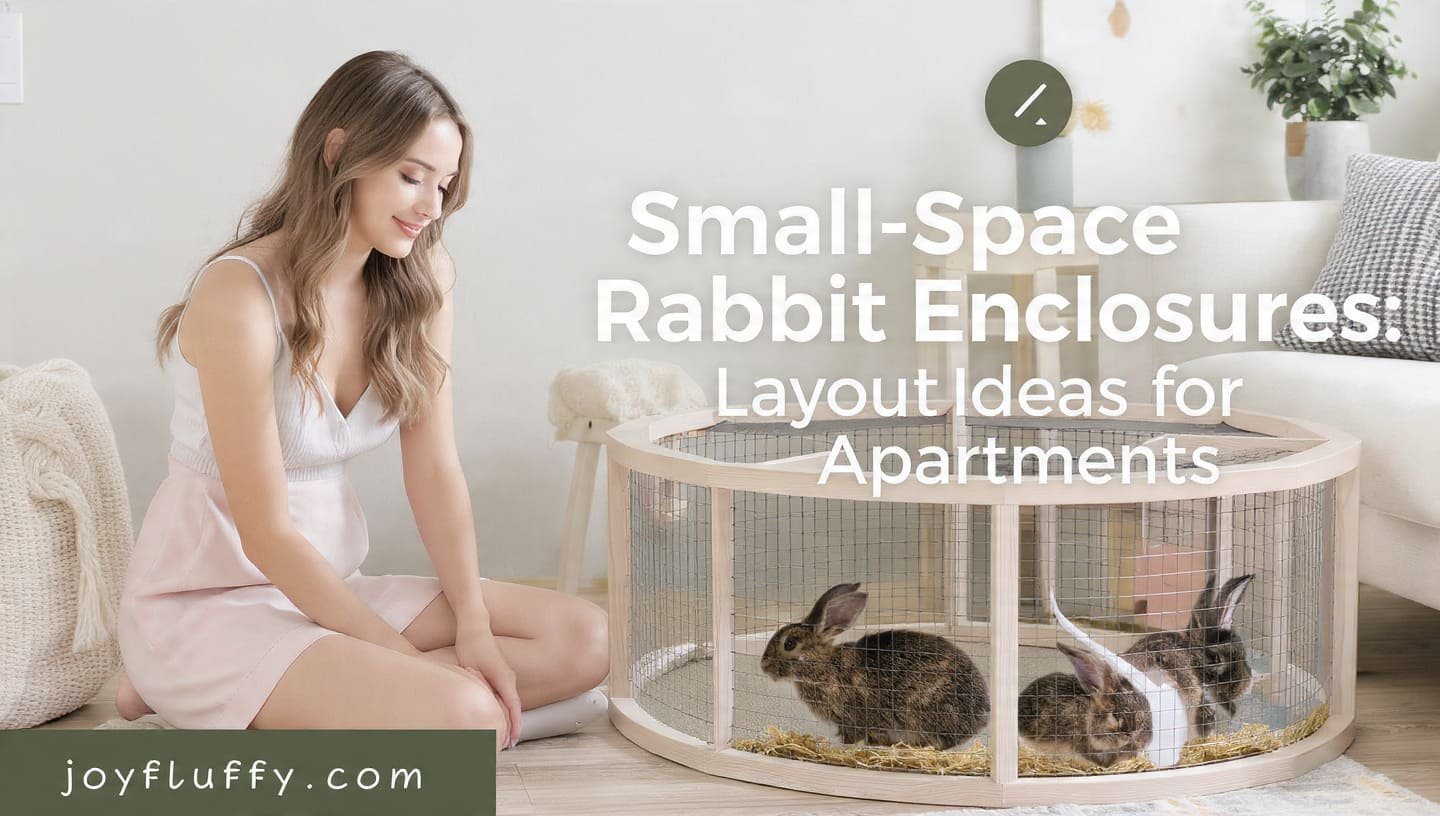
Small‑Space Rabbit Enclosures: Layout Ideas for Apartments
Small-Space Rabbit Enclosures: The Ultimate Guide to Apartment Layouts
Living in a small apartment doesn’t mean you have to give up on your dream of having a rabbit. You’re searching for small-space rabbit enclosure ideas because you know your fluffy companion deserves better than a cramped cage, but you’re working with limited square footage. Good news: with the right layout strategies and creative thinking, you can give your bunny a spacious, comfortable home that actually makes your apartment look better, not cluttered. This guide will show you exactly how to design integrated habitat systems that prioritize both rabbit welfare and modern aesthetics, turning your space constraints into design opportunities.
I’ve helped hundreds of urban rabbit owners transform their tiny studios and one-bedroom apartments into bunny paradises. The secret isn’t finding more space—it’s using the space you have more intelligently. Whether you’re dealing with a 400-square-foot studio or a narrow railroad apartment, these apartment bunny setup strategies will work for you.
Why Traditional Cages Fail in Small Apartments
Walk into any pet store and you’ll see rows of wire cages marketed as “rabbit homes.” These traditional enclosures create three major problems for apartment dwellers. First, they’re visual eyesores that scream “I have a pet” rather than blending with your carefully curated decor. Nobody wants their living room to look like a section of the zoo.
Second, standard cages create what designers call “visual bulk.” A solid-walled metal cage breaks up your sightlines and makes your already small apartment feel even more cramped. Your eye stops at the cage instead of flowing through the room, creating psychological claustrophobia even when there’s technically enough physical space.
Third, and most importantly, traditional pet-store cages are too small for a rabbit’s actual needs. The House Rabbit Society emphasizes that rabbits need room to hop at least three consecutive times and fully stretch out. Most commercial cages don’t even come close to these minimums. Your bunny ends up stressed, under-exercised, and prone to health problems.
The solution isn’t to find a bigger apartment. It’s to completely rethink what a rabbit enclosure can be in the first place.
The “Golden Rules” of Small-Space Rabbit Design
Before you start building or buying anything, you need to understand the fundamental principles that make small-space rabbit enclosures actually work. These aren’t just suggestions—they’re the foundation of every successful minimalist rabbit habitat.
Prioritizing Floor Area vs. Vertical Tiers
Rabbits are ground-dwelling animals. Unlike cats who naturally climb and perch at heights, bunnies evolved to live on plains and in burrows. Their skeletal structure isn’t designed for climbing or jumping from elevated surfaces. This biological reality shapes how we approach vertical space.
You can use vertical space for your rabbit, but it must be done carefully. Think “low-level tiers” rather than “cat towers.” A bunny can safely navigate ramps and platforms that are 12 to 15 inches high, which doubles your usable floor space without risking injury. Go higher than this, and you’re asking for a broken leg or worse.
Here’s where it gets interesting for apartment dwellers: vertical thinking applies to storage too. Mount hay bags and water bottles on walls. Use command hooks to hang toys from the enclosure ceiling. Every inch of vertical storage you create is floor space your rabbit can actually use.
The 4-to-1 Rule: Calculating Your Space Needs
Forget what the pet store told you. The actual space calculation for a healthy rabbit is simple: measure your bunny from nose to tail when they’re fully stretched out, then multiply by four. That’s your minimum enclosure length. If your rabbit measures 18 inches stretched out, you need at least 72 inches (6 feet) of linear space.
Now here’s the apartment-dweller’s trick: this doesn’t all have to be in a traditional rectangular cage. You can achieve this through an L-shaped layout that wraps around a corner. You can create it with a narrow, long enclosure that runs along a wall. You can even meet this requirement with a combination of a home base enclosure and attached exercise pen that folds out during the day.
Width matters too, but you have more flexibility here. A 2-foot depth is generally sufficient, which is perfect for apartments because a 2-foot deep by 6-foot long enclosure feels less intrusive in a room than a 4-foot by 3-foot square.
Top 5 Layout Concepts for Tiny Homes
Now we get to the exciting part—actual indoor rabbit layout ideas you can implement this weekend. Each concept solves specific apartment challenges while maintaining rabbit welfare standards.
The “Furniture Hybrid”: Enclosures That Double as Tables
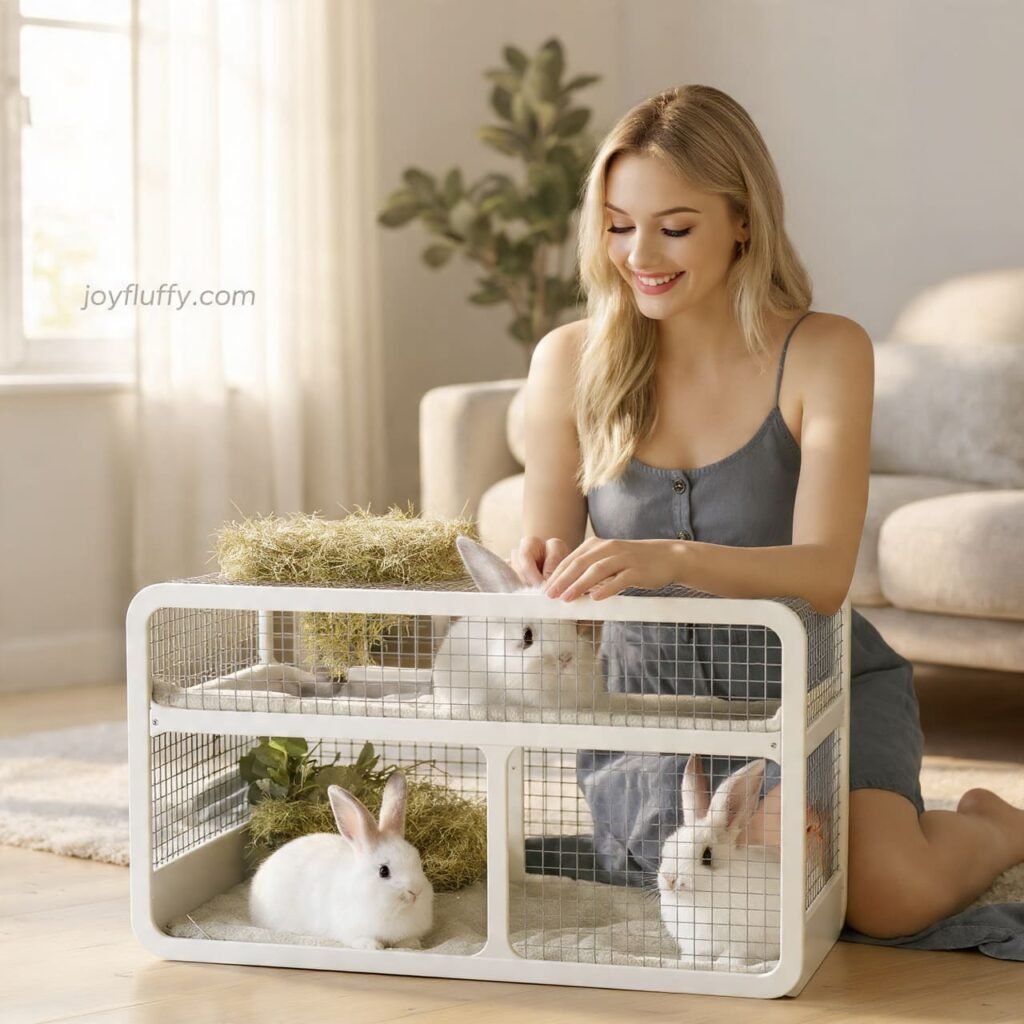
This is the holy grail of small-space design: furniture that serves two purposes simultaneously. A long, low rabbit enclosure can function as a TV stand, supporting your television while housing your bunny below. A credenza with the cabinet doors replaced by wire mesh becomes a sophisticated habitat that looks like intentional decor.
The key is choosing or building pieces at the right height. A 30-inch tall console table is perfect—it’s standard furniture height for humans but creates a spacious two-level home for your rabbit with a 15-inch ground floor and a 15-inch upper tier.
Start with a basic piece like the IKEA BESTÅ cabinet system. Remove the solid doors and replace them with hardware cloth (welded wire mesh with 1/2-inch spacing). Add a shelf inside at the halfway point to create your two levels. Suddenly, you have a sleek entertainment center that completely hides the fact that it’s a rabbit home.
Other furniture-hybrid possibilities include window seat enclosures where the padded top provides human seating while the interior houses your rabbit, or end tables that flank your sofa with mesh sides for ventilation.
The Under-Bed Retreat: Utilizing Dead Space
If you have a bed with clearance underneath, you’re sitting on valuable real estate. The space under a bed typically offers 12 to 18 inches of vertical clearance and several feet of length—perfect dimensions for a bunny home base.
This vertical rabbit hutch DIY concept works especially well in studio apartments where the bed takes up significant floor space anyway. Build or buy a low-profile enclosure designed to slide under the bed. Use bed risers to increase under-bed clearance if needed, gaining both rabbit space and additional storage.
The beauty of this layout is invisibility. When guests visit, your rabbit’s home is completely hidden. Your apartment appears pet-free, which can be advantageous in buildings with strict pet policies or when you want to maintain a minimalist aesthetic.
Combine this with a small folding exercise pen that expands into the room during active hours, then collapses away when you need your floor space back. Your rabbit gets their required exercise while you maintain the flexibility to use your apartment for human activities.
The “Invisible” Acrylic Habitat: Maintaining Visual Flow
Remember that visual bulk problem we discussed? Acrylic panels solve it completely. Clear acrylic enclosures allow sightlines to pass through the habitat rather than stopping at an opaque barrier. Your eye travels through the space, making your apartment feel larger even with the enclosure present.
These setups look modern and expensive—like high-end aquariums for rabbits. The transparency means your bunny becomes part of your decor rather than an obstruction to it. You can actually see your rabbit lounging or playing, which is part of the joy of having a pet.
Purchase clear acrylic sheets from hardware stores and construct a simple box frame using aluminum channels or PVC connectors. Leave the top open for ventilation and access. The enclosure virtually disappears against your wall while keeping your rabbit safely contained.
The main downside is cleaning—acrylic shows every smudge and nose print. Keep glass cleaner handy and plan for weekly wipe-downs to maintain that crystal-clear appearance.
The Vertical Loft: Using C&C Grids to Go Up, Not Out
Cube and Coroplast grids (C&C grids) revolutionized guinea pig housing, and they work brilliantly for apartment rabbit setups too. These modular wire storage cubes connect together to create custom configurations that maximize vertical space while minimizing floor footprint.
Build a three-tier structure that’s 2 feet deep, 4 feet wide, and 3 feet tall. Each tier sits about 12 inches above the previous one, connected by wide ramps. You’ve just created 24 square feet of usable rabbit space while only consuming 8 square feet of floor area. That’s a 3-to-1 efficiency ratio impossible with traditional single-level enclosures.
C&C grids come in white, which keeps the structure visually light. They’re also incredibly affordable—you can build a complete setup for under one hundred dollars. The modular nature means you can easily reconfigure or expand as your needs change or if you move to a different apartment layout.
Line each level with corrugated plastic (coroplast) sheets as flooring. These create solid surfaces that protect your rabbit’s feet while being completely waterproof and easy to wipe clean. Cut the plastic slightly larger than each tier and fold up the edges to create shallow pans that contain bedding and litter.
The Nook Conversion: Turning Closets into Bunny Suites
Do you have a closet you’re not fully using? A built-in nook or alcove that’s collecting boxes? These spaces can transform into luxury rabbit apartments with minimal modification.
Remove the closet doors (store them for reinstallation when you move) and replace them with a custom wire mesh gate. The existing closet rod becomes a perfect mounting point for hay bags and hanging toys. Install a small shelf at the midpoint to create two levels. Add a vinyl floor mat to protect the closet floor and you’ve just created a private rabbit suite.
This approach is perfect for renters because it’s completely reversible. No permanent modifications to your apartment are required. When your lease ends, remove your additions, reinstall the doors, and move on with your deposit intact.
The enclosed nature of a closet conversion offers acoustic benefits too. The three solid walls create a quieter, more den-like environment that many rabbits find comforting, especially in noisy apartment buildings. Your bunny gets a retreat from the chaos of urban living.
DIY IKEA Hacks for the Modern Urban Rabbit
IKEA furniture has become synonymous with rabbit habitat hacks for good reason. The furniture is affordable, widely available, and designed with clean lines that blend into modern apartments. More importantly, IKEA pieces are modular and easily modified. Similar to creating enrichment for birds, rabbits benefit greatly from thoughtfully designed environments that provide both stimulation and safety.
The BESTÅ Transformation: A Sleek, Hidden Enclosure
The BESTÅ cabinet system is the Swiss Army knife of rabbit housing. These low-profile cabinets come in various widths (23, 47, 71, or 94 inches) and are exactly 15 inches deep—a perfect dimension for rabbit enclosures.
Purchase two BESTÅ frames in your desired length and stack them vertically. You now have two levels, each about 15 inches high. Remove the back panels for ventilation or replace them with hardware cloth. Replace the front doors with custom wire mesh panels, or simply remove the doors entirely for an open-front design.
Add the BESTÅ shelf inserts to create different zones within each level—a kitchen area with food bowls, a bathroom corner with the litter box, and a lounging space with soft bedding. The sleek white or wood-grain finish looks like intentional furniture rather than pet equipment.
The top surface becomes functional human space. Place your TV there, use it as a console table for keys and mail, or display plants and photo frames. Nobody looking at your apartment would guess the elegant cabinet is actually a rabbit home.
The KALLAX Corner: Modular Play Zones
KALLAX shelving units (formerly called EXPEDIT) offer different possibilities. These square-cubed shelves work beautifully as play structures and storage combined. A 2×4 KALLAX placed horizontally creates eight cubby holes—perfect for a combination habitat and supply storage system.
Designate the bottom four cubes as your rabbit’s living space by removing the dividers to create two large chambers. The top four cubes store hay, pellets, cleaning supplies, and toys. The entire unit occupies just 30 inches of width and 15 inches of depth, yet provides substantial living space and storage.
For corner placements, arrange two KALLAX units in an L-shape. Your rabbit can move between both sections while the corner space between them becomes additional floor area. This configuration works exceptionally well in studio apartments where corner space is often underutilized.
Add fabric storage bins to some cubes to create hidey-holes your rabbit will love. Leave others open so your bunny can hop through them like tunnels. The modular nature means you can constantly rearrange the setup to keep your rabbit mentally stimulated—similar to how you might create varied environments for exotic pets like skinks.
Rental-Friendly Flooring and Wall Protection
Protecting your apartment from rabbit damage isn’t optional—it’s essential for keeping your security deposit and maintaining a good relationship with your landlord. The right protective layers also make cleaning infinitely easier.
Top-Layer Materials: Rugs vs. Vinyl vs. Foam
Your flooring protection should be a layered system, not a single material. Start with the base layer closest to your actual apartment floor. For this, use clear vinyl chair mats or interlocking foam puzzle mats. These create a waterproof barrier that prevents any accidents from reaching your carpet or hardwood.
The middle layer should be absorbent. Disposable puppy training pads work well here, though they need frequent replacement. A more eco-friendly option is washable waterproof mattress pads cut to size. They absorb any moisture while remaining machine-washable.
The top layer is what your rabbit actually walks on. This needs to provide traction (rabbits can slip on smooth surfaces causing leg injuries) while being comfortable and easy to clean. Options include: low-pile cotton rugs that can go in the washing machine, fleece blankets that dry quickly, or professional rubber-backed mats designed for veterinary kennels.
- Bottom: Vinyl chair mat or foam tiles (waterproof protection)
- Middle: Absorbent waterproof pad (catches accidents)
- Top: Washable rug or fleece (comfort and traction)
This system means minor messes only affect the easily replaceable top layer while major accidents are caught by the middle layer before ever reaching your actual floors.
Avoid newspaper or wood shavings as floor covering in your apartment enclosure. Both create dust and debris that spread throughout your living space. They also decompose quickly in humid environments, creating odors you definitely don’t want in close quarters.
Protecting Baseboards Without Losing Your Deposit
Rabbits are natural chewers, and your apartment’s baseboards are prime targets. Once your bunny starts gnawing on that corner trim, they won’t stop until there’s significant damage. Prevention is key.
Clear furniture edge guards work beautifully for this purpose. These flexible plastic strips with adhesive backing wrap around baseboard corners and edges. They’re designed for baby-proofing but work perfectly for bunny-proofing. When you move out, they peel off cleanly without leaving residue or damage.
For longer stretches of baseboard, use clear vinyl corner protectors or cut clear acrylic sheets to height and secure them with removable command strips. The clear material becomes nearly invisible against white baseboards while providing an impenetrable barrier to rabbit teeth.
Another strategy involves strategic furniture placement. Position your rabbit’s enclosure so the back and sides shield baseboards from access. Your bunny can’t chew what they can’t reach.
For extreme chewers, consider the nuclear option: whole-room baseboards covered with decorative trim pieces that sit in front of the original baseboards. These take-off baseboard covers from hardware stores install without nails and remove easily when you move. Yes, it’s more work, but it’s still cheaper than replacing your landlord’s damaged trim.
Organizing Rabbit Supplies in a Small Footprint
Rabbit ownership comes with stuff: hay, pellets, toys, grooming supplies, cleaning products. In a small apartment, this supply pile can quickly take over if not organized properly.
The “Vertical Pantry” for Hay and Pellets
Hay is your biggest storage challenge because rabbits need constant access to large quantities. A single bunny can go through several pounds of hay per week. Traditional hay storage—those big bags sitting on your floor—won’t cut it in limited space.
Create a vertical hay storage system using a narrow rolling cart or wall-mounted baskets. The IKEA RÅSKOG cart is perfect for this purpose. Three tiers hold hay on top, pellets in the middle, and cleaning supplies on bottom. The entire footprint is just 14 inches wide and can roll into a corner or closet when not in use.
Alternatively, install wall-mounted wire baskets in your closet or pantry. Keep hay in breathable canvas bags hung from s-hooks. The vertical arrangement keeps hay fresh and accessible while consuming zero floor space.
For pellets and treats, use airtight containers that stack vertically. Clear plastic bins let you see when supplies are running low. Label everything clearly so anyone helping you can find what they need without searching.
Hidden Litter Box Stations
Your rabbit needs a litter box, but it doesn’t need to be visible to guests or dominate your visual space. Concealment strategies make small apartments feel less cluttered while maintaining easy access for daily cleaning.
The simplest solution is incorporating the litter box into your enclosure design. Position it in a back corner of the habitat where it’s accessible to your bunny but not immediately visible to humans. Place the hay rack directly above it since rabbits naturally eat while using the bathroom—this encourages good litter habits while containing mess to one area.
For free-roam setups, consider furniture pieces designed to hide litter boxes. Cat litter box furniture works equally well for rabbits. These decorative cabinets look like end tables or benches but have interior spaces that conceal litter pans. Your rabbit enters through a small doorway while the box itself remains invisible.
Another option is repurposing storage benches or ottomans. Cut an entrance hole in one side and place the litter box inside. The bench serves its original function for humans while hiding your rabbit’s bathroom. Just ensure adequate ventilation holes and easy access for your cleaning routine.
Safety First: Ventilation and Lighting in Tight Quarters
Small apartments present specific safety challenges for rabbits. Limited airflow and natural light can create health hazards if not properly addressed.
Rabbits are sensitive to heat and require good air circulation. They can’t sweat or pant effectively like dogs, so they rely on environmental cooling. In a small apartment, especially during summer, temperatures can spike to dangerous levels quickly.
Position your rabbit’s enclosure away from direct heat sources like radiators or sunny windows. Ensure at least two sides of the habitat have open airflow through wire mesh or ventilation panels. Never create an enclosed box with only one opening—this creates a hot, stale air pocket dangerous for your bunny.
Consider adding a small USB-powered fan near (not directly on) the enclosure during hot weather. This circulates air without creating uncomfortable drafts. Position it to move air across the habitat opening rather than blowing directly on your rabbit.
Lighting is equally important. Rabbits need exposure to natural light cycles to maintain healthy circadian rhythms. An enclosure tucked in a dark corner or under a bed needs supplemental lighting.
Use full-spectrum LED bulbs on timers to simulate natural day-night cycles. Position lights to illuminate the enclosure without shining directly in your rabbit’s eyes. A 12-hour on, 12-hour off cycle works well for most bunnies.
Avoid placing habitats in extremely bright areas too. While natural light is beneficial, direct sunlight through windows can overheat enclosures quickly. Use sheer curtains to diffuse intense afternoon sun if your rabbit’s space is near windows.
Maintenance Hacks for Small-Space Living (Odor Control)
Let’s address the elephant—or rather, the rabbit—in the room: smell. In a 500-square-foot studio, odors don’t have anywhere to dissipate. Poor maintenance in a small space becomes unbearable quickly. But proper protocols keep your apartment smelling fresh even with a rabbit roommate.
The foundation of odor control is the daily spot-clean method. Every morning and every evening, remove any soiled litter and droppings from your rabbit’s enclosure. This takes literally two minutes but prevents the ammonia buildup that creates that distinctive “rabbit smell” people complain about.
Use high-quality, dust-free paper-based litter. Products like Yesterday’s News or Fresh News absorb moisture and odors far better than wood shavings or straw. They also don’t create the respiratory-irritating dust that cedar and pine shavings produce. Change litter completely twice per week in small apartments—more frequently than you would in a house with better ventilation.
Invest in a quality HEPA air purifier rated for your square footage. Position it near your rabbit’s enclosure where it can actively filter hay dust, dander, and odors. Run it continuously—the cost of electricity is minimal compared to the benefit of clean air.
The CDC emphasizes the importance of indoor air quality for health. A good air purifier protects both you and your rabbit from airborne particles and allergens concentrated in small spaces.
Wash all fabric elements weekly: fleece liners, blankets, toys. Use unscented detergent and add white vinegar to the rinse cycle as a natural deodorizer and bacteria eliminator. Hot water kills more bacteria but check care labels first to prevent shrinkage.
Clean the enclosure floor and walls with white vinegar solution (50/50 mix with water) during litter changes. Vinegar neutralizes ammonia odors naturally without harsh chemicals harmful to your rabbit’s sensitive respiratory system. For stubborn stains, make a paste of baking soda and water, let it sit for ten minutes, then scrub and rinse thoroughly.
Making Room for Joy
Creating a home for your rabbit in a small apartment isn’t about compromise—it’s about creativity. The strategies in this guide prove that space constraints can actually lead to better design solutions than unlimited square footage would produce. When you’re forced to think carefully about every inch, you end up with habitats that are more intentional, more aesthetic, and often more comfortable for your bunny than those “spare room rabbit sanctuaries” that become neglected over time.
Your rabbit doesn’t need a mansion. They need a well-designed space that meets their biological requirements while fitting harmoniously into your life. A thoughtfully planned small-space rabbit enclosure checks both boxes.
Start with one concept from this guide. Maybe it’s the BESTÅ hack that transforms an IKEA cabinet into a sleek habitat. Maybe it’s the under-bed retreat that finally uses that dead space. Pick the idea that best fits your apartment layout and your aesthetic preferences, then implement it this weekend.
Remember that rabbit housing isn’t static. Your setup will evolve as you learn your bunny’s preferences and habits. That’s the beauty of modular systems like C&C grids or IKEA hacks—they adapt as your needs change. Be patient with yourself and your rabbit as you figure out what works best in your unique space.
Living with a rabbit in a small apartment requires more planning than having one in a house, but the rewards are identical: the joy of watching your bunny binky across their space, the comfort of their quiet presence during Netflix binges, the satisfaction of providing a rescued animal with a loving home. Square footage doesn’t determine happiness. Thoughtfulness does.